Your Prevention Map
Choose the women's or men's map. Print it, put it on the fridge, and take it to your next GP visit.
Women's Prevention Map
Key health checks and conditions to look for, detect early and help prevent
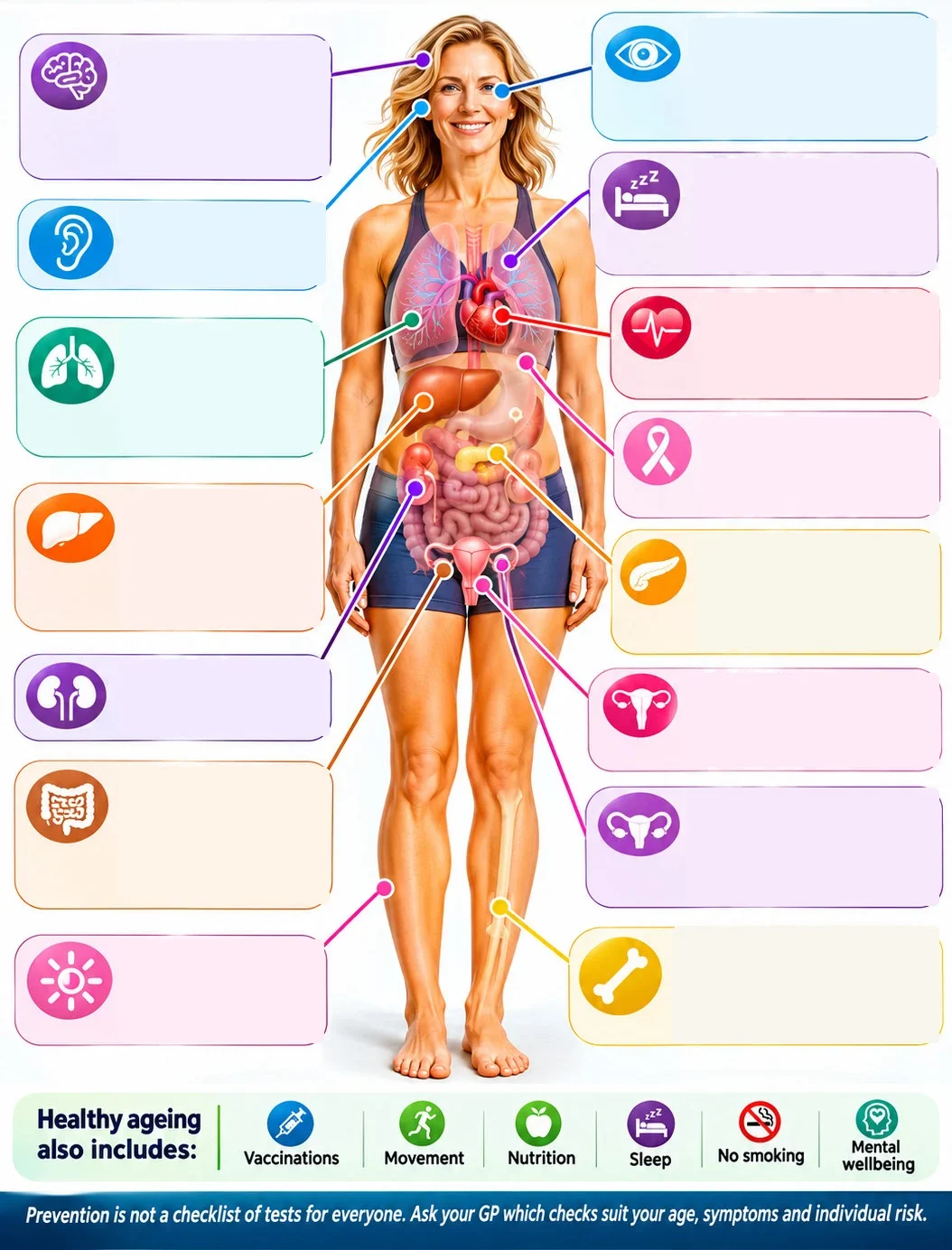
Brain and mind
Worth knowing about Stroke. Memory problems, such as dementia. Depression.
Ears
Worth knowing about Hearing loss, more common with age
Lungs
Worth knowing about Chronic obstructive pulmonary disease (COPD).
Screening program Lung cancer: a screening program for some people aged 50 to 70 with no symptoms and a significant smoking history. Ask your GP whether you are eligible.
Liver
Worth knowing about Fatty liver disease (MASLD). Liver cancer checks only for people with serious liver disease, such as cirrhosis or chronic hepatitis B or C.
Kidneys
Worth knowing about Chronic kidney disease: early detection and ongoing monitoring
Bowel
Screening program Bowel cancer. A free home bowel test every 2 years, ages 45 to 74.
Skin
Worth knowing about Melanoma and other skin cancers. Watch for new or changing spots.
Eyes
Worth knowing about Glaucoma (damage to the optic nerve, often with no early symptoms). Vision changes, such as cataracts and macular disease.
Sleep and breathing
Worth knowing about Sleep apnoea. Talk to your GP about loud snoring, poor sleep or daytime tiredness.
Heart and vessels
Worth knowing about Coronary artery disease. Atrial fibrillation (irregular heartbeat). Heart failure. High blood pressure. Ask your GP about a heart and stroke risk check from 45, or earlier for some people.
Breast
Screening program Breast cancer. A mammogram every 2 years from 50 to 74. Women aged 40 to 49 can choose to attend. A strong family history needs an individual plan.
Pancreas and metabolism
Worth knowing about Type 2 diabetes. Pancreatic cancer: no routine screening test.
Cervix
Screening program Cervical cancer. A cervical screening test (HPV test) every 5 years from 25 to 74.
Ovaries
Worth knowing about Ovarian cancer: no routine screening test. Know your family history and see your GP about bloating, pelvic pain or bowel changes that do not settle.
Bones and muscles
Worth knowing about Osteopenia and osteoporosis (bone thinning). Falls and fracture risk. Muscle strength, for independence and healthy ageing.
Blood
Worth knowing about Blood tests when clinically indicated. Routine leukaemia screening for people without symptoms is not currently recommended.
Education only. Not personal medical advice. Take this map to your GP.
Australian edition · healthylifenetwork.com.au · Version 1 · Clinically reviewed [month year]
Men's Prevention Map
Key health checks and conditions to look for, detect early and help prevent
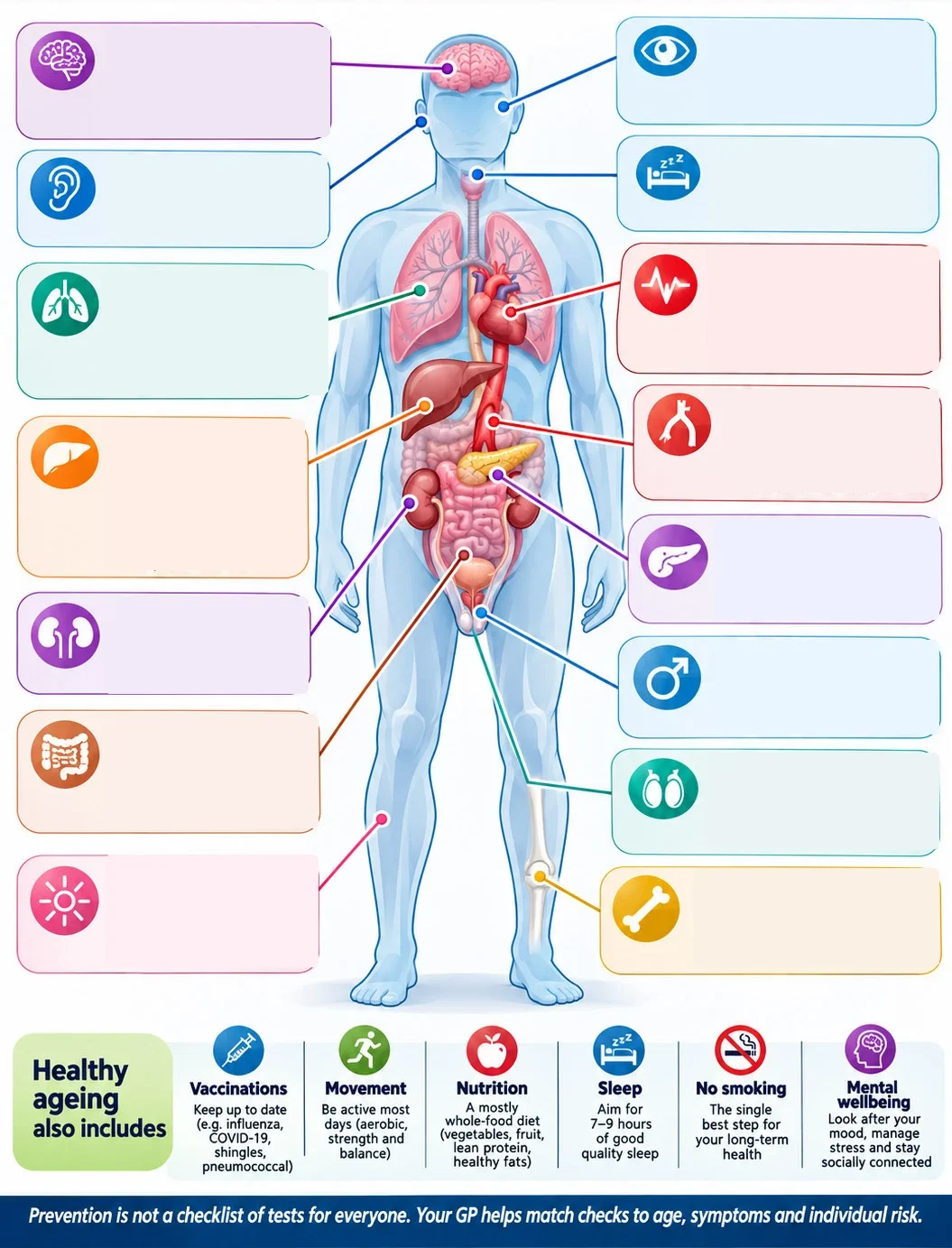
Brain and mind
Worth knowing about Stroke. Memory problems, such as dementia. Depression.
Ears
Worth knowing about Hearing loss, more common with age
Lungs
Worth knowing about Chronic obstructive pulmonary disease (COPD).
Screening program Lung cancer: a screening program for some people aged 50 to 70 with no symptoms and a significant smoking history. Ask your GP whether you are eligible.
Liver
Worth knowing about Fatty liver disease (MASLD). Liver cancer checks only for people with serious liver disease, such as cirrhosis or chronic hepatitis B or C.
Kidneys
Worth knowing about Chronic kidney disease: early detection and ongoing monitoring
Bowel
Screening program Bowel cancer. A free home bowel test every 2 years, ages 45 to 74.
Skin
Worth knowing about Melanoma and other skin cancers. Watch for new or changing spots.
Eyes
Worth knowing about Glaucoma (damage to the optic nerve, often with no early symptoms). Vision changes, such as cataracts and macular disease.
Sleep and breathing
Worth knowing about Sleep apnoea. Talk to your GP about loud snoring, poor sleep or daytime tiredness.
Heart and vessels
Worth knowing about Coronary artery disease. Atrial fibrillation (irregular heartbeat). Heart failure. High blood pressure. Ask your GP about a heart and stroke risk check from 45, or earlier for some people.
Aorta
Worth knowing about Abdominal aortic aneurysm. Worth discussing with your GP if you are over 65 and have smoked, or have a family history.
Pancreas and metabolism
Worth knowing about Type 2 diabetes. Pancreatic cancer: no routine screening test.
Prostate
Worth knowing about Prostate cancer. A PSA test is discussed with your GP based on your age and risk, such as family history or ancestry.
Testes
Worth knowing about Testicular cancer: no routine screening test. Know what is normal for you, and see your GP about a lump, swelling or pain.
Bones and muscles
Worth knowing about Osteopenia and osteoporosis (bone thinning). Falls and fracture risk. Muscle strength, for independence and healthy ageing.
Blood
Worth knowing about Blood tests when clinically indicated. Routine leukaemia screening for people without symptoms is not currently recommended.
Education only. Not personal medical advice. Take this map to your GP.
Australian edition · healthylifenetwork.com.au · Version 1 · Clinically reviewed [month year]